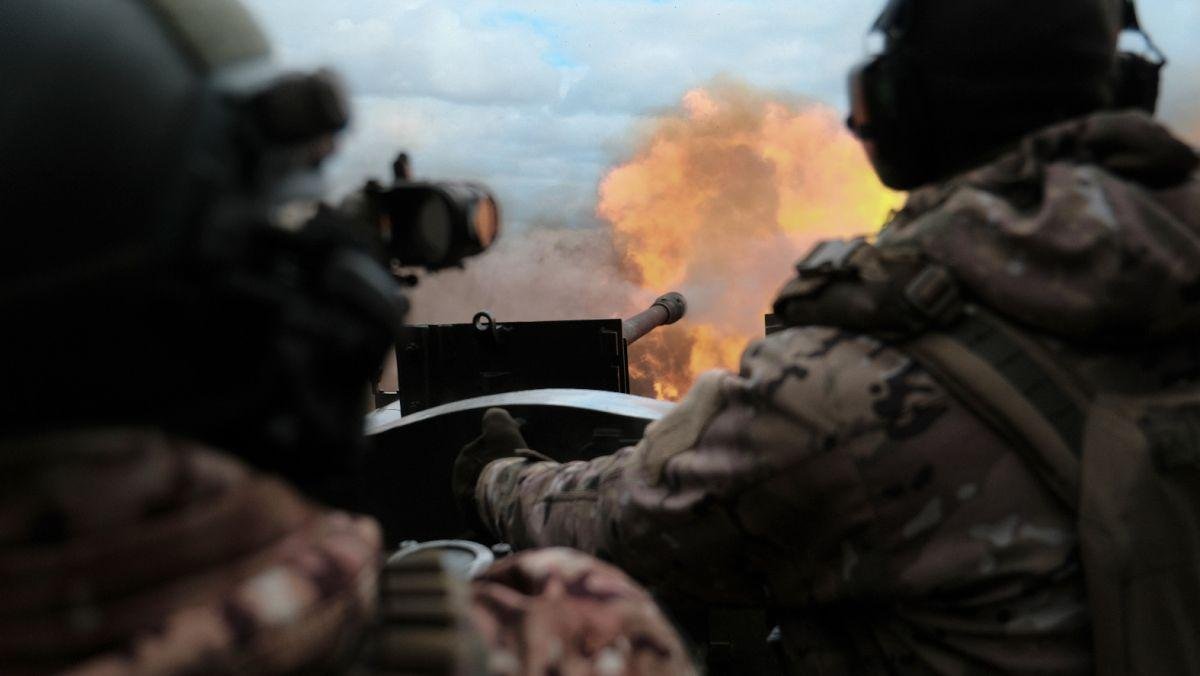
Moscow Turns Tiny Gains Into Big Propaganda: The Strategy of Cognitive Warfare
A new analysis by the US-based Institute for the Study of War (ISW) has revealed a significant discrepancy between Russia’s public claims of battlefield success and the reality on the ground in Ukraine. According to the think tank, Moscow is deliberately inflating its modest territorial gains as part of a "cognitive warfare" campaign aimed at convincing the West that a Russian victory is inevitable, thereby eroding support for Kyiv. The Kremlin's narrative was recently bolstered by statements from Sergei Rudskoy, a senior Russian military official, who claimed that Russian forces have seized roughly 900 square kilometers and 42 settlements since the start of 2026. He also asserted that in 2025, Moscow captured over 6,700 square kilometers and more than 300 settlements. Rudskoy further alleged that Russian troops now control over half of Kostiantynivka, a strategic city in the Donetsk region, and have made advances in the southeastern Zaporizhzhia region and the neighboring Dnipropetrovsk region. However, the ISW’s independent assessment paints a far more limited picture. Analysts have verified that Russian forces have captured only 19 settlements and approximately 572 square kilometers since the beginning of the year—a difference of 23 settlements and 328 square kilometers from the official claims. In Kostiantynivka, the ISW found that Russian troops have advanced or conducted infiltration missions in only about 7% of the city. In the contested Zaporizhzhia region, Moscow's net gain is roughly 99 square kilometers and three settlements so far this year, a figure nearly offset by Ukrainian counter-advances that have reclaimed about 86 square kilometers. The Zaporizhzhia region remains a critical flashpoint, not only militarily but also in ongoing peace negotiations, as it is home to Europe's largest nuclear power plant, which has been under Russian occupation since 2022. "Russia is seizing small rural settlements along the border and presenting them as major victories to reinforce the false narrative that Russian victory in Ukraine is inevitable," the ISW stated, highlighting the psychological dimension of the conflict. "In reality, Russian forces continue to make only marginal gains at very high cost." ‘A Strategic Failure for Putin’ This assessment was echoed by Finnish President Alexander Stubb. In an exclusive interview with TVP World, Stubb characterized Moscow's invasion—which enters its fourth year on Tuesday—as a profound strategic failure for President Vladimir Putin. "Militarily, he’s losing on the battlefield," Stubb told host Adam Jasser on the program "On the Record." "He is not advancing, and when he advances, Ukraine advances somewhere else. So this has been a military disaster for Russia."